The Biopharmaceutics Classification System is one of the most useful shorthand tools in drug development. Two axes, solubility and permeability, sort a compound into one of four classes and shape decisions from formulation to biowaivers. That usefulness is exactly why an error in the inputs is dangerous. When BCS classification permeability comes from a model with the wrong enzymes, the class is wrong, and every decision downstream inherits the mistake. For ester prodrugs, that is not a rare edge case. It is a structural blind spot.
What BCS actually measures
BCS places a drug by two properties. Solubility asks whether the dose dissolves in the gut. Permeability asks whether the dissolved drug crosses the intestinal wall. Regulators lean on this framework directly: the FDA and ICH M9 guidance allow a BCS-based biowaiver, skipping a clinical bioequivalence study, for high-solubility, high-permeability drugs. So the permeability number is not academic. It can decide whether you run a human study at all.

Teams usually measure permeability in a cell model, and for decades the default has been Caco-2. For a stable small molecule, that works well enough. The trouble starts when the molecule is not stable in the model for the wrong reason.
The esterase artifact, in one step
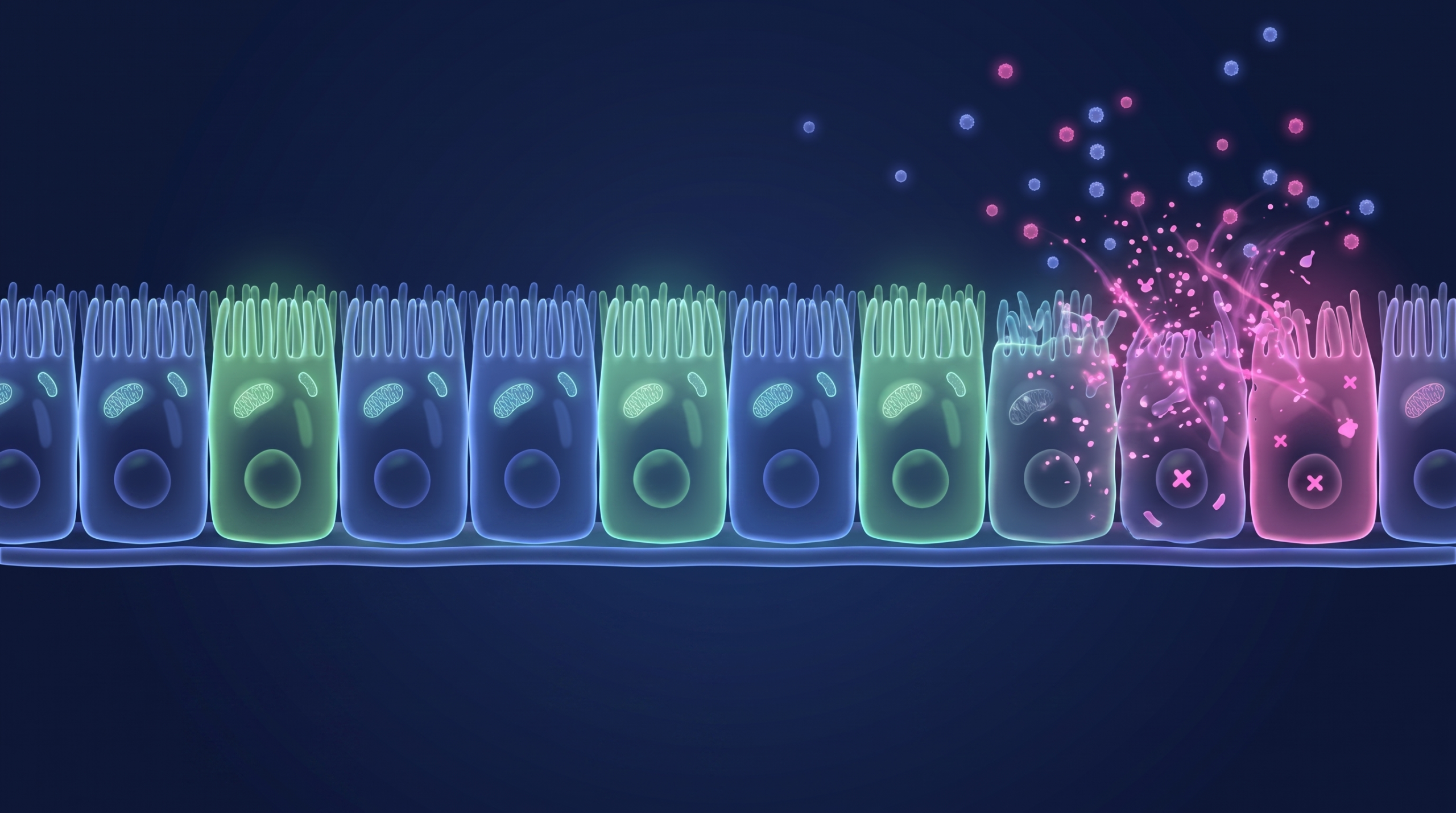
Here is the mechanism, kept short because the two carboxylesterases get the full treatment elsewhere. Caco-2 carries a non-physiological esterase profile: high CES1, which human enterocytes do not express, and little CES2, which they do. An ester prodrug that should cross the human intestine intact meets a different fate here, because the Caco-2 layer hydrolyzes it on the way through. Less parent drug reaches the other side. Apparent permeability reads low, and recovery drops with it.
Now feed that low number into BCS. A compound that absorbs well in people scores as low permeability and lands a class too low. That is not a hypothetical. In a published Caco-2 study of temocapril, the cells’ CES1 hydrolyzed the ester prodrug during transport, and its permeability only made sense once the researchers shifted the carboxylesterase activity toward the human intestinal pattern. The artifact was real, and it moved the number.
Why a wrong BCS classification costs more than a data point
A wrong BCS class does not stay contained. The error propagates.
It changes formulation strategy, because the perceived barrier to absorption is now solubility or permeability that was never the real problem. A misclass can also forfeit a biowaiver, forcing a clinical bioequivalence study the science did not actually require, or worse, propping up one that never should have earned it. And it distorts how candidates get rank-ordered against each other, because a well-absorbed prodrug can look worse than a truly inferior compound that happens not to be an esterase substrate. The cost is not one bad assay. It is a series of confident decisions built on a number that never reflected human intestinal biology.
| BCS input | What it should reflect | What the esterase artifact does |
|---|---|---|
| Permeability | Human intestinal absorption of the parent | Reads low, parent lost to CES1 hydrolysis in the model |
| Mass balance / recovery | Parent recovered across the barrier | Drops as prodrug is cleaved prematurely |
| Assigned BCS class | The compound’s real absorption profile | Pushed a class too low for ester prodrugs |
| Downstream call | Formulation, biowaiver, rank-order | Built on a distorted input |
Fixing the input, not patching the output
The instinct is to correct for the artifact after the fact. Groups have even engineered Caco-2 subclones with CES1 turned down toward human levels, precisely so they can study ester compounds without it. That works, and it is a fair signal of how real the problem is. It is also a lot of effort spent making a cancer line behave a little more like the intestine.
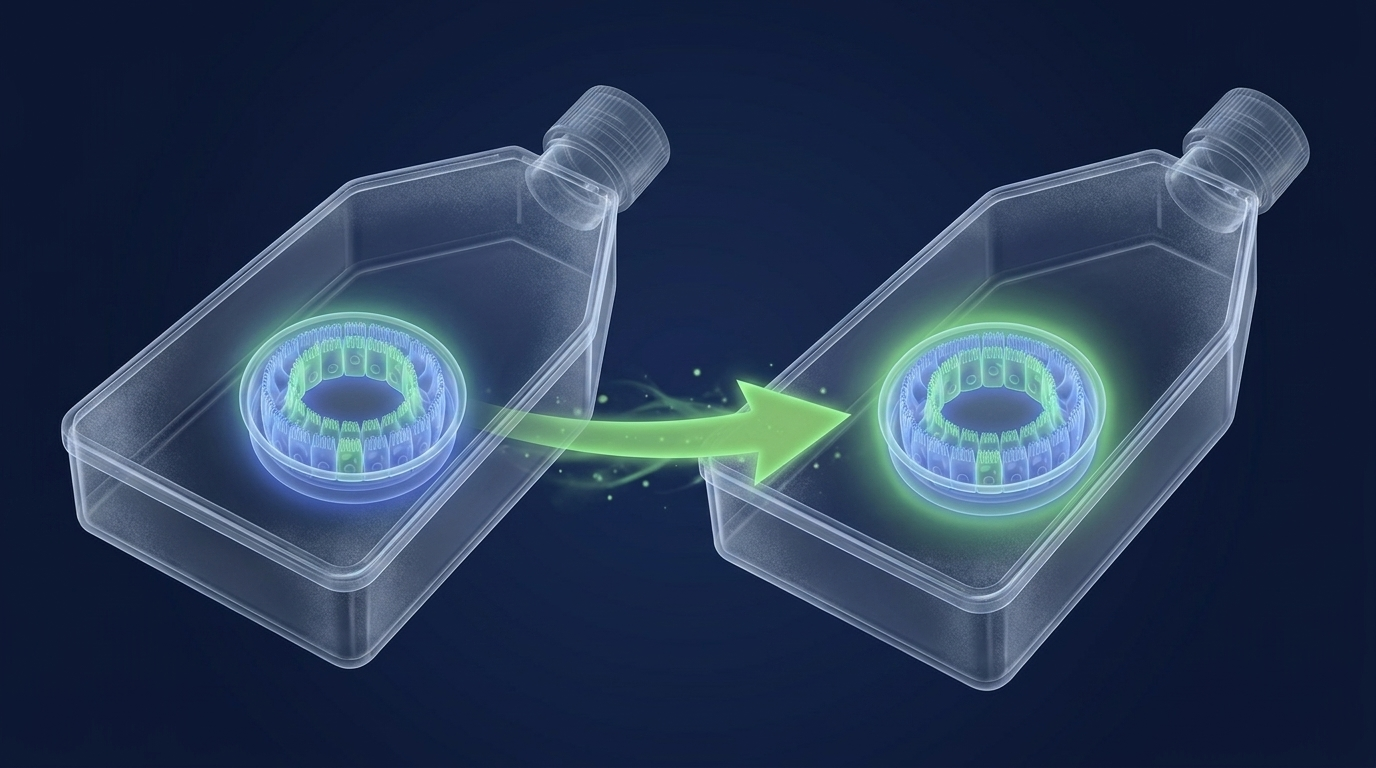
The cleaner path is to measure on tissue that already carries the human enzyme profile. RepliGut® Planar grows from primary human intestinal stem cells, so it expresses the carboxylesterases the way native intestine does: CES2 present, CES1 low. An ester prodrug that would survive the human gut survives the model too, and the apparent permeability you record reflects absorption rather than an assay-induced hydrolysis. Get that input right and the BCS class it feeds is honest.
BCS is only as good as the two numbers underneath it. Solubility is chemistry you can trust. Permeability is biology, and biology depends on the tissue you run it on. For ester prodrugs, where the entire strategy rests on where and when the molecule is cleaved, a human intestinal model is what keeps the BCS classification, and the prodrug bioavailability picture it supports, pointed at the right answer.