Most people treat esterase hydrolysis as a single number. You put an ester-containing compound in front of a model, watch it disappear, and record a rate. That habit hides the fact that carboxylesterase drug metabolism is not one process. It is two enzymes with different jobs and different addresses. Which one your compound meets first decides whether it is cleared, activated, or absorbed intact. For an ester prodrug, that distinction is the whole ballgame.
Two enzymes, two tissues
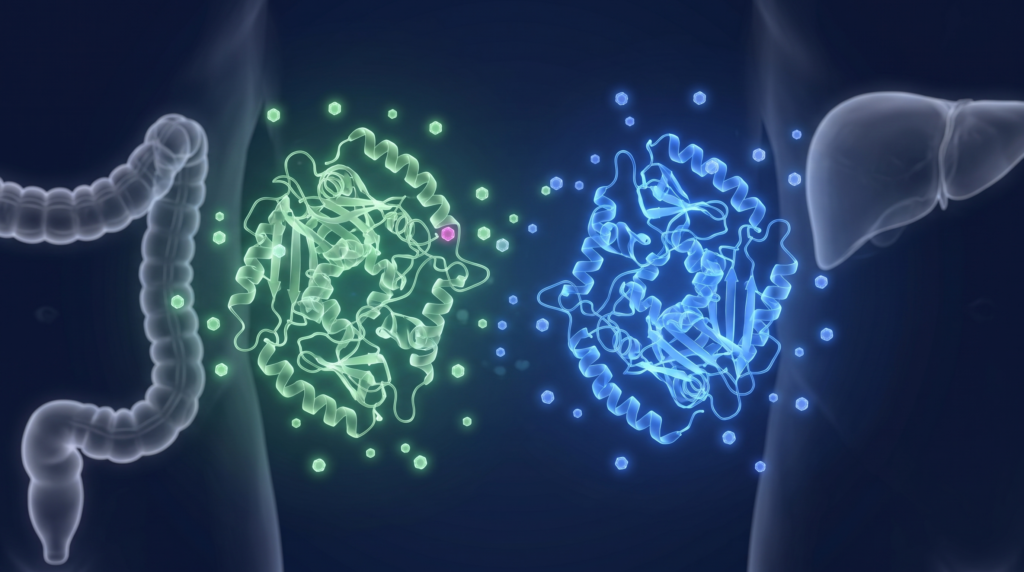
Humans carry two carboxylesterases that matter for drugs: CES1 and CES2. They are not interchangeable, and they do not sit in the same place. CES1 dominates the liver. CES2 is the predominant isoform in the human small intestine, where CES1 is barely present. So the gut and the liver hydrolyze esters through different enzymes, with different substrate preferences.
That preference is not a small effect. The two isoforms favor different chemistries. CES1 tends to prefer substrates with a small alcohol group and a large acyl group, while CES2 leans the other way. A given ester can be a good substrate for one and a poor substrate for the other. So when you ask how fast a compound is hydrolyzed, the honest answer starts with a question of your own: hydrolyzed by which enzyme, in which tissue?
Why the address decides carboxylesterase drug metabolism
Think about the examples the field knows well. Oseltamivir, the antiviral, is an ethyl ester that CES1 converts to its active form, mostly in the liver. Clopidogrel runs through CES1 as well. Both are designed to survive the gut and activate downstream. The anticancer agent irinotecan is the opposite case: it is activated by CES2, which is abundant in the intestine. So is the prodrug allisartan, where CES2 in the gut wall contributes to holding oral exposure down.
Line those up and the pattern is clear. A compound built to activate in the liver wants a quiet CES1 in the intestine, so it crosses intact. A compound handled by CES2 gets worked on in the gut wall itself. The same ester bond, in two tissues, produces two different stories. Get the tissue enzyme wrong and you have measured the wrong drug.
Where the standard model diverges
Here is the catch that makes this more than a biology lecture. Caco-2, the colon cancer line used as the default intestinal permeability screen, expresses CES1, which human enterocytes do not, and lacks CES2. It carries the liver-type esterase where the gut-type belongs, and it is missing the one the intestine actually uses.
For a cell biologist, that is not a detail to wave away. It means a CES1-sensitive prodrug can be hydrolyzed in the model at a rate it would never see in a real human intestine, and a CES2 substrate can pass through untouched because the responsible enzyme is absent. The consequence shows up directly in the numbers you care about, which is why a bad esterase profile can quietly distort BCS classification and the prodrug bioavailability estimate a program is built on. I keep this piece short here on purpose. The full argument lives in those posts.
What a human esterase profile buys you
None of this makes carboxylesterases exotic. What matters is the substrate you test on. If the fate of an ester depends on which enzyme it meets in the gut, then a gut model has to carry the human enzyme profile, or the experiment is answering a different question than the one you asked.
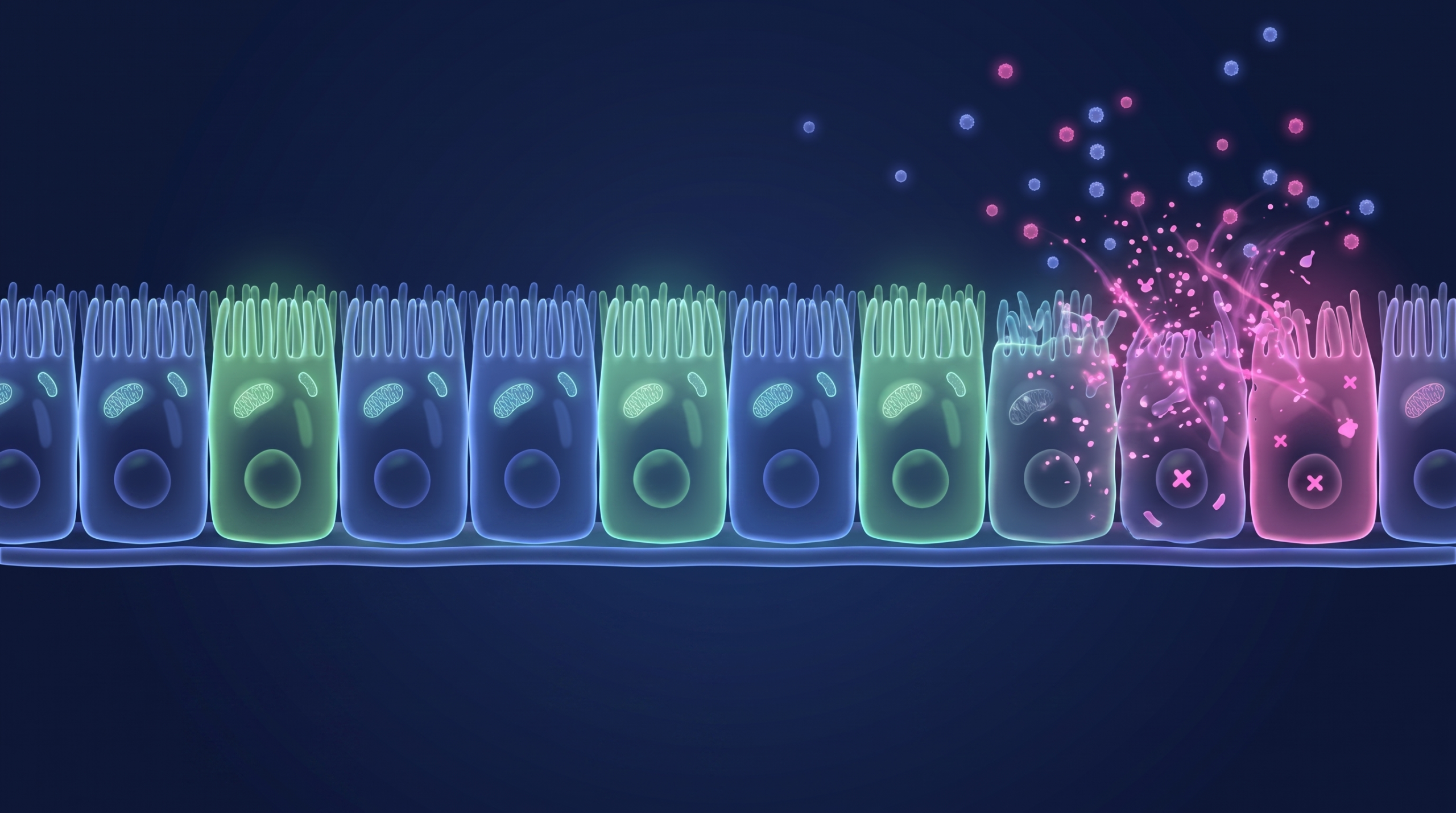
That is the pattern RepliGut® Planar is built to reproduce. Because it is grown from primary human intestinal stem cells rather than a tumor line, it expresses the carboxylesterases the way native intestine does: CES2 present, CES1 low. For an ester compound, that means first-pass intestinal metabolism reads through the enzyme that would actually act in a person. The measurement reflects human biology because the tissue does.
| CES1 | CES2 | |
|---|---|---|
| Dominant tissue | Liver | Small intestine |
| Level in human enterocytes | Minimal | High |
| Level in native Caco-2 | High, non-physiological | Low to absent |
| Example substrates | Oseltamivir, clopidogrel | Irinotecan, allisartan |
| Role for an oral ester prodrug | Often the intended downstream activator | Can act in the gut wall itself |
So the useful way to think about carboxylesterase drug metabolism is not “how fast does it hydrolyze,” but “which esterase meets it first, and where.” That is a design question as much as an assay question. It is one worth answering on human tissue before a program commits to a molecule. Which esterase your compound is built around is not a footnote. It is the plan.