Ask a gastroenterologist why a biologic stopped working. You will often get the same answer: the patient started making antibodies against the drug. It is one of the least glamorous problems in inflammatory bowel disease, and one of the most consequential. Anti-drug antibodies are the quiet tax on nearly every biologic we use. So the TL1A class, for all its promise, just got a sharp reminder of the bill. I think it is worth understanding why, because immunogenicity is where a lot of good mechanisms go to die.
The tax we already pay
Start with the drugs we know best. Anti-TNF antibodies changed the course of IBD. Yet a large share of patients lose response over time, with immunogenicity a big part of the reason. Take the PANTS cohort, a prospective study of anti-TNF therapy in Crohn’s. There, anti-drug antibodies were common, and tightly linked to low drug levels and treatment failure. We manage it with workarounds. We pair the biologic with an immunomodulator to blunt the response, monitor drug levels, and switch agents when titers climb. None of that is a fix. The underlying reality is simple. The immune system treats a therapeutic antibody as one more thing to neutralize, and in a disease of immune dysregulation, it is very good at the job.
TL1A learns the same lesson
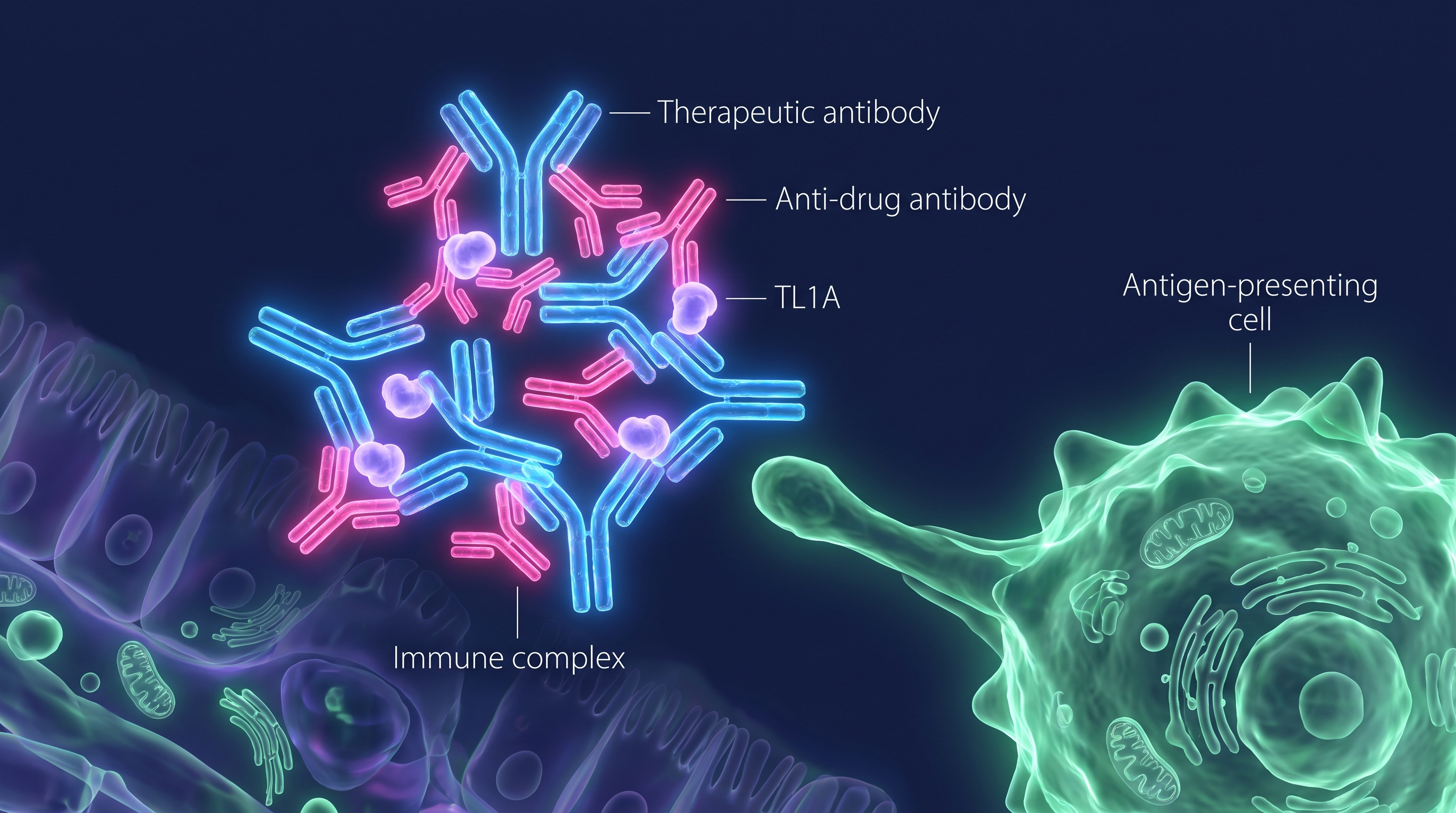
TL1A is now teaching that lesson in a new dialect. Several early TL1A molecules, Amgen’s discontinued AMG966 among them, ran into anti-drug antibodies in nearly every patient. The cause was not sloppy manufacturing. Drug and soluble TL1A were assembling into immune complexes large enough to break tolerance. So the body answered with a response against both the antibody and the target itself. That is a humbling result for a target this promising. As a result, immunogenicity moves from a box you check late in development to a design constraint you carry from the first molecule. It is a good part of why the bispecific programs are so preoccupied with antibody format.
Why IBD is a hard place for a drug to stay invisible
The setting makes it worse. The inflamed gut is an immunologically hot environment. It teems with antigen-presenting cells and activated lymphocytes whose job is to sample foreign material and react. You are asking a drug to stay invisible in exactly the tissue most primed to notice it. Now layer the immune-complex problem on top. A bispecific engaging two soluble targets has more ways to build the lattices that break tolerance. So the struggles of the first TL1A molecules start to look less like bad luck and more like physics. The engineering has improved. The biological pressure has not gone anywhere.
Why anti-drug antibodies are so hard to predict
Here is what makes it maddening. We are still not good at predicting immunogenicity before people are dosed. Animal models are close to useless here, because a mouse immune system does not read a human antibody the way a human one does. So the field has built in vitro human assays to close the gap: MAPPs assays, CD4 T-cell assays, ex vivo B-cell readouts. There is also real momentum toward using human in vitro readouts as alternatives to animal studies. They help. Still, they are mostly built around peripheral blood cells. Those miss where much of the action actually sits in IBD: the gut wall.
Modeling where immunogenicity actually happens
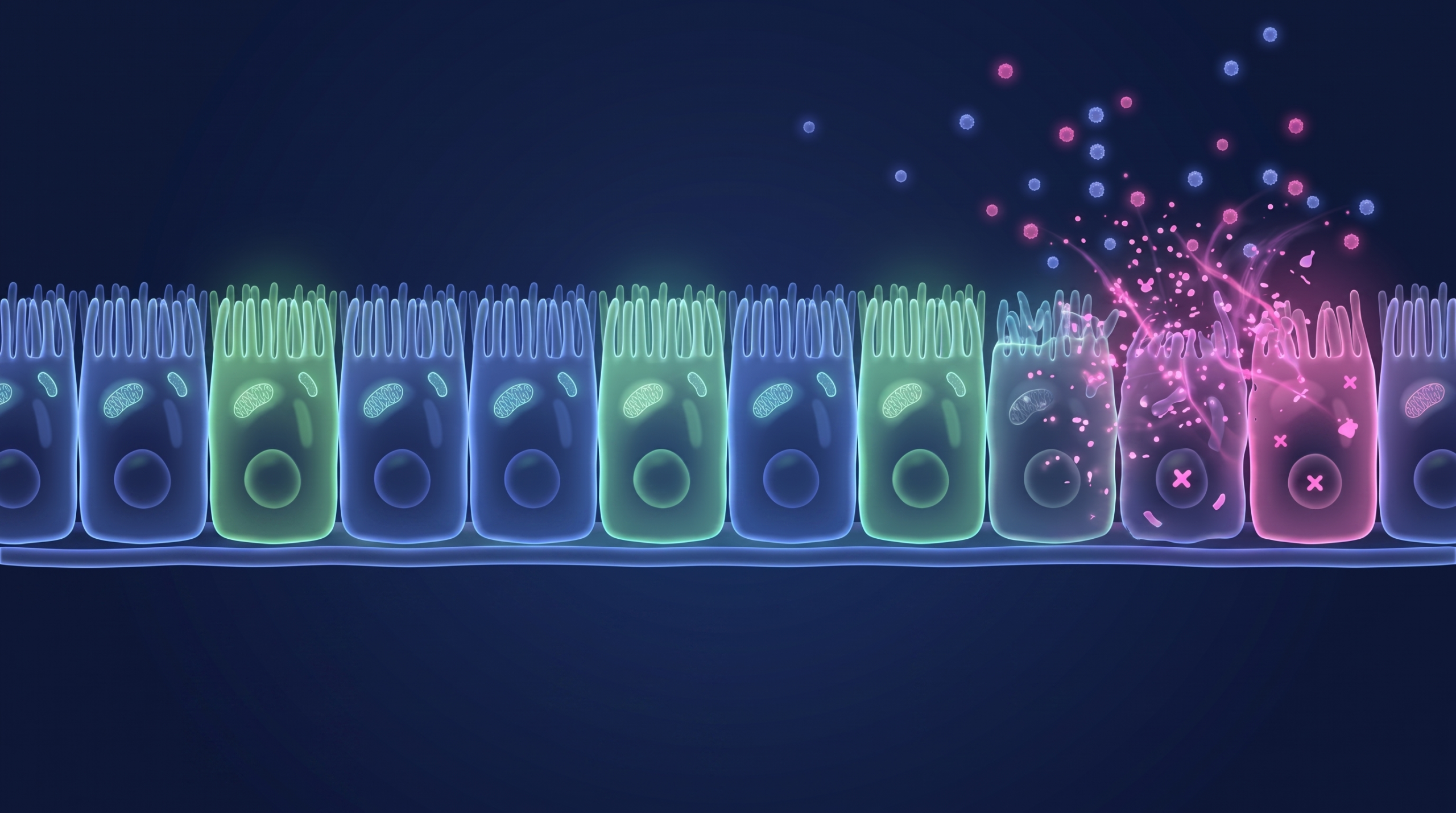
That gap is the part I find most useful to work on. Immunogenicity in IBD is not only a systemic event. It plays out at the inflamed mucosa. There, antigen-presenting cells, T cells, and epithelium are all in contact, and immune complexes form and get sampled. So if you want to know how a TL1A antibody or a TL1A x IL-23 bispecific behaves there, you have to watch it in context. Does it form complexes? How does the local immune compartment read them? Answering that needs those cells together in human tissue, not a mouse and not a tube of serum. That is a large part of why we build human immune co-culture models at Altis on the RepliGut® platform. Predicting immunogenicity outright is still hard, and I would not overpromise on it. Still, modeling the tissue where it happens beats the tools most programs lean on today.
Immunogenicity will never make headlines the way a Phase 3 win does. Yet it decides which drugs keep working after year one. The TL1A class is betting billions on durable responses. Whether those bets pay off depends, in part, on how well we read the immune response before the clinic does. For anyone building human models of intestinal inflammation, that is a problem worth owning.